English
 Chinese
 Pусский
 Français
 Español
 Deutsch
 Português
 한국인
한국인 عربي
عربي Prev:
null

May 26,2026
Pageview: 14
Last summer, a friend called me in a panic. His workshop had just fried a brand-new CNC controller, yet the $9.99 power strip with “surge protection” was still glowing cheerfully. After some diagnostics, the culprit wasn’t a lightning strike — it was the power company doing a line switch a mile away, sending a three-second voltage sag followed by a 15% overvoltage that lasted minutes. That’s when I realized how many people treat “voltage protector” and “surge protector” as interchangeable, when in reality they guard against completely different threats. If you’ve ever wondered why your expensive gear still fails despite being plugged into a surge strip, you’re about to understand the missing piece.
The grid is dirty, but not all dirt is the same. A surge protector is designed to handle transient overvoltages — those microsecond-to-millisecond spikes caused by lightning, grid switching, or large motor startups. These events can push line voltage to several thousand volts for an incredibly brief moment. The protection element, usually a metal oxide varistor (MOV), shunts that excess energy to ground almost instantaneously. Once the spike passes, it resets (or sacrifices itself). According to IEEE C62.41, the standard surge environment expects these transients to last mere microseconds, and a typical surge strip is rated to absorb a finite number of joules.
What surge strips don’t address is the steady, continuous deviation from the nominal voltage — the so-called “swells” (overvoltage lasting seconds to hours) and “brownouts” (undervoltage). This is the realm of voltage regulation and monitoring equipment. Motors, compressors, and sensitive electronics hate prolonged under-voltage; it drives up current draw, overheats windings, and degrades insulation. Sustained overvoltage does the reverse, pushing components beyond their rated tolerance, leading to premature failure. A device that tackles these issues must continuously sample the line and disconnect or correct the output when limits are breached.
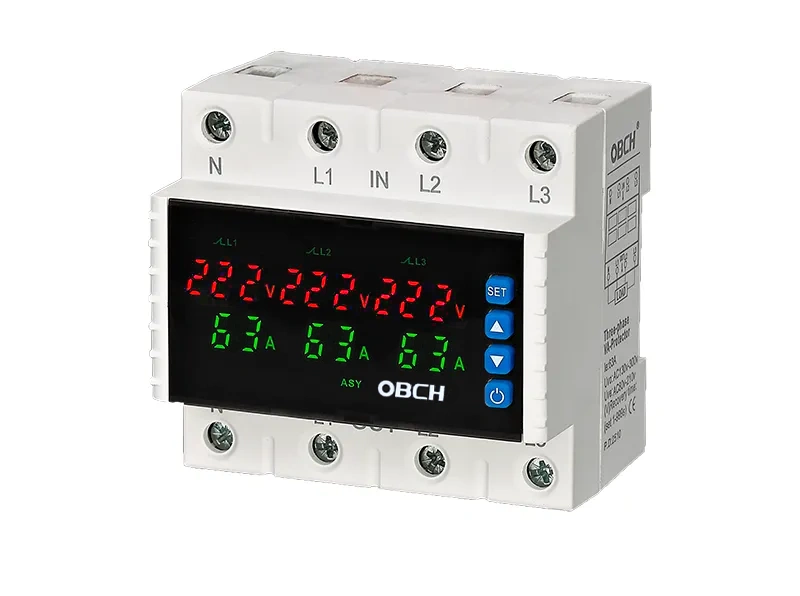
Think of a surge protector as a high-speed pressure relief valve: it reacts only when an extreme spike exceeds a set threshold, clamping it down. A voltage protection device (the term we’ll use sparingly here) acts more like a thermostat for your electrical supply — constantly watching, waiting for the voltage to drift outside a safe window (e.g., 185V–265V for 230V nominal), and then physically disconnecting the load or correcting it. The time domain is key: surge protection reacts in nanoseconds; voltage monitoring typically responds in a few microseconds to a few seconds intentionally, so as not to trip on harmless flickers.
| Feature | Surge Protector | Voltage Monitoring & Disconnect Device |
| Primary threat | Microsecond voltage spikes (lightning, switching) | Sustained overvoltage, undervoltage, phase loss |
| Response time | < 1 nanosecond (clamping) | Adjustable, typically 0.1s–30s (avoids nuisance tripping) |
| Protection method | Diverts excess energy to ground | Disconnects load or regulates output voltage |
| Duration handled | Transient (μs–ms) | Continuous (seconds to hours) |
| Self-sacrifice | Yes, MOVs degrade after repeated hits | No, designed for continuous operation and reclosure |
| Typical use case | Consumer electronics, simple power strips | Industrial motors, HVAC, laboratory instruments, full facility protection |
The table explains why a surge protector alone won’t stop a refrigerator compressor from burning out during a hot summer brownout. The compressor doesn’t care about a 50μs spike; it suffers from a 10-minute voltage dip that forces it to strain while starting. That’s where specialized line-conditioning equipment becomes essential. If you manage a facility or rely on production machinery, exploring solutions engineered for continuous voltage irregularities can clarify the gap between simple surge strips and comprehensive safeguards.
Many modern devices marketed to consumers now combine both functions. You’ll find power strips claiming “voltage protection” alongside surge clamping. The reality, however, is that most consumer-grade combos implement a very basic voltage disconnect feature — a simple comparator circuit that cuts power if the voltage exceeds, say, 270V. They rarely offer adjustable setpoints, restart delays, or genuine under-voltage protection that avoids damaging deep sags. Meanwhile, in industrial environments, the preferred approach is often a layered defense: a Type 2 surge protective device (SPD) at the distribution panel, coupled with a robust voltage control relay or an automatic voltage regulator on critical circuits.
From experience troubleshooting a packaging line, a monthly maintenance log showed seven unexplained controller resets over six months. The facility had industrial surge arrestors, so everyone blamed software bugs. A power quality logger revealed nightly under-voltage events that dipped below 195V for 4–8 minutes. Once a dedicated automatic voltage monitoring relay with adjustable delay was installed and set to disconnect during under-voltage and auto-reclose after 180 seconds, the resets disappeared. This illustrates how real-world diagnostics quickly separate the capabilities: surge data showed nothing abnormal, while the voltage trend told the whole story.
How do you decide what you actually need? Walk through these scenarios:
You’re protecting a home office PC and monitor: A high-quality surge-protected power strip is usually enough, provided it has an indicator showing the MOVs are still intact. Add a basic voltage monitor if your area suffers frequent brownouts and you want to automatically cut power to sensitive solid-state drives.
You run a small server room or a cold storage unit: Here, a momentary voltage sag can trigger a compressor lockout or corrupt data. Surge protection is mandatory, but you also need an undervoltage/overvoltage cutoff device with adjustable delay to prevent short-cycling and protect motors. Look for units with phase loss and sequence protection if you operate three-phase loads.
Industrial motor-driven systems (pumps, conveyors, CNC): The cost of a burnt motor dwarfs any protection device expense. An adequately rated voltage monitoring relay, combined with a molded-case circuit breaker and possibly an automatic voltage regulator, is a minimal investment. For detailed specifications and how these systems integrate into existing panels, you can review a configurable protection platform that supports both single and three-phase networks.
Medical equipment or precision measurement: The margin for error is negligible. A double-conversion uninterruptible power supply (UPS) is often recommended, which essentially regenerates clean AC irrespective of input quality. Some advanced protection units now incorporate simultaneous voltage and current monitoring, providing an extra diagnostic layer to predict downstream faults before they trip safety protocols.
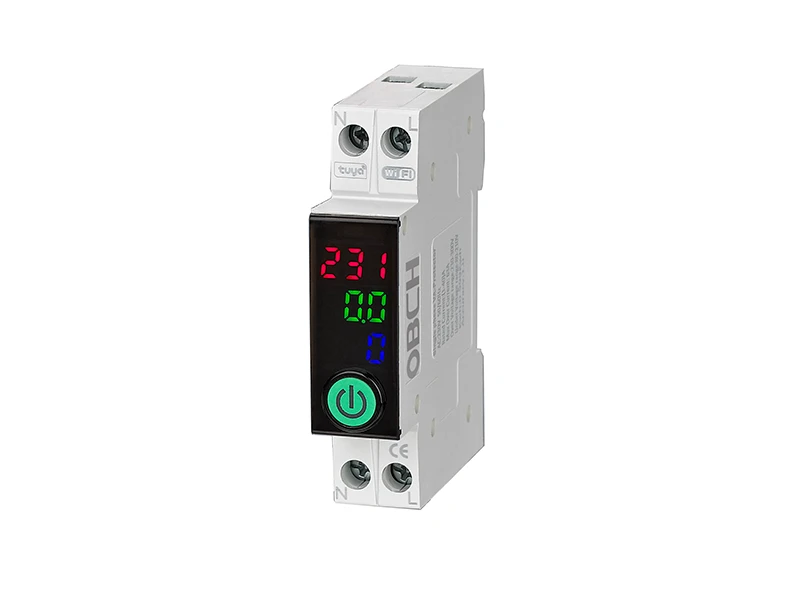
It’s easy to be seduced by marketing that wraps all electrical protection into one magic box. A more helpful framework is to categorize your threats by time scale: spikes (microseconds), swells/sags (seconds to minutes), and long-term regulation (hours). Use SPDs for the first, and electronic voltage guard devices for the second and third. If you’re designing a new installation, consider panel-mount solutions that offer transparent diagnostics, such as status LEDs for high/low voltage trip, time delay countdown, and real-time voltage display.
We’ve seen that effective protection is not about owning a device with a particular name — it’s about matching the response characteristic to the disturbance. A correctly set voltage disconnect unit will not fight a lightning strike; a MOV will not save a motor from a brownout. Recognizing this division is the first step toward a truly resilient electrical infrastructure.
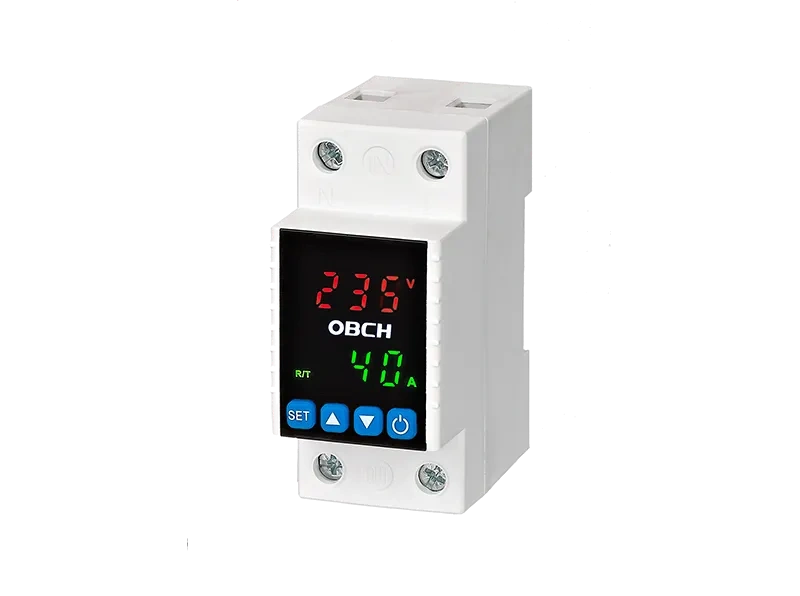
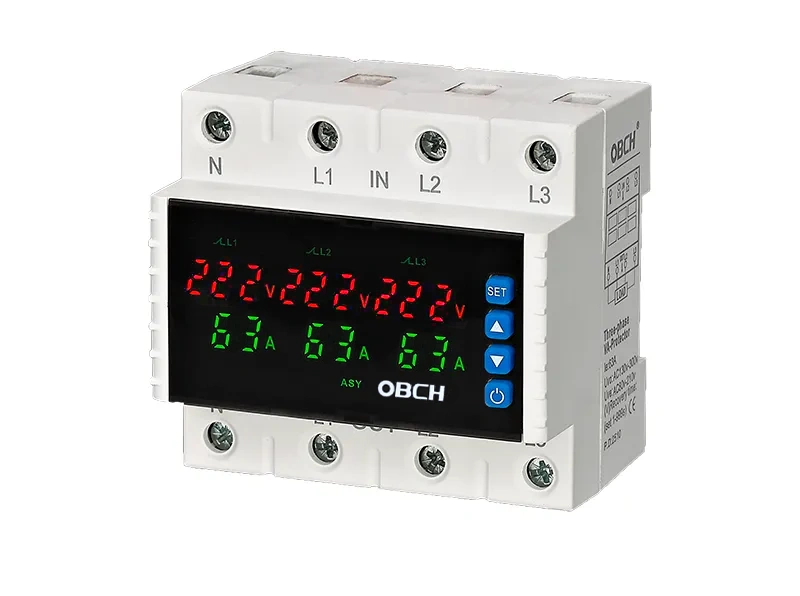
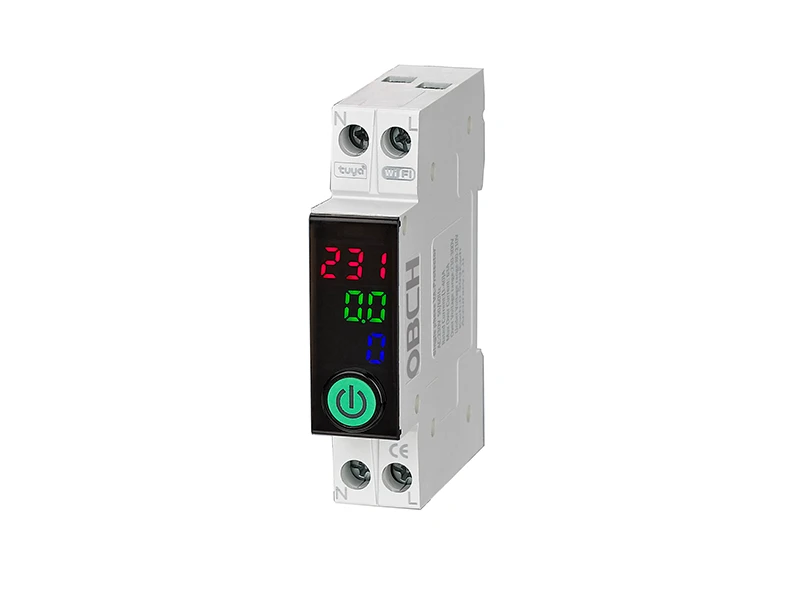
If you’re looking to move beyond the generic power strip and want a more professional, purpose-built layer of defense, it’s worth getting to know the OBCH line of voltage and current protection solutions. Their approach combines adjustable voltage windows, configurable time delays, and continuous monitoring into a single unit — without the false promise of doing absolutely everything. You can get a closer look at the technical configuration options here and evaluate whether this type of dedicated control matches your installation’s risk profile.
Disclaimer: This article is for informational purposes only and does not replace a professional electrical risk assessment. Always consult a qualified electrician or engineer when installing protective devices. Data references from IEEE C62.41 series and general power quality guidelines.

GET A QUOTE