English
 Chinese
 Pусский
 Français
 Español
 Deutsch
 Português
 한국인
한국인 عربي
عربي Prev:
null

Jun 10,2026
Pageview: 12
Last summer, a friend texted me a photo of his home office: a burnt power strip, a dead monitor, and a faint smell of melted plastic. “I had a protector,” he insisted. “I thought I was covered.”
He did own a protector. But it was the wrong kind for the problem that hit him — a prolonged voltage dip, not a lightning strike. That one mismatch cost him a monitor, a router, and half a day of lost work. It also taught me that most people use “voltage protector” and “surge protector” interchangeably, assuming they’re the same species of electrical shield. They aren’t. And if you can’t tell them apart, you’re guarding against the wrong threat half the time.
Before you spend another dollar on protection gear, let’s break down what these devices actually do, where they diverge, and how to read the signs your home or equipment is sending you.
Electrical anomalies come in two dominant forms, and each requires a fundamentally different weapon.
Voltage fluctuations are slow, sustained deviations from the nominal voltage. Think of an old neighborhood where the grid sags every evening when air conditioners kick in, or a rural workshop where voltage routinely creeps above 250V. These events last seconds, minutes, or even hours. They cook electronics not through a single jolt but through relentless stress — overheating motors, degrading insulation, and slowly frying sensitive circuits.
Voltage surges, on the other hand, are brief, violent spikes lasting microseconds to milliseconds. Lightning strikes are the poster child, but far more common sources sit inside your own building: the compressor in your fridge switching off, a well pump cycling, or the elevator down the hallway. These transient overvoltages can punch through delicate semiconductor junctions in an instant, leaving no visible trace but a dead device.

If you picture electricity as water, a voltage protector is a pressure regulator that shuts off the supply when it drifts out of a safe band. A surge protector is a pressure relief valve that bleeds off sudden spikes without interrupting normal flow. One watches the timeline, the other watches the transients. Mistaking one for the other is like wearing a raincoat to a snowstorm — technically outerwear, profoundly wrong for the actual hazard.
A voltage protector monitors the incoming line voltage continuously. When it detects an overvoltage (say, above 260V) or an undervoltage (below 170V, depending on the region), it physically disconnects the load using a relay. The better ones also include a time-delay function: once voltage returns to normal, they wait a calibrated period before reconnecting, preventing short-cycling that can kill compressors in refrigerators and air conditioners.
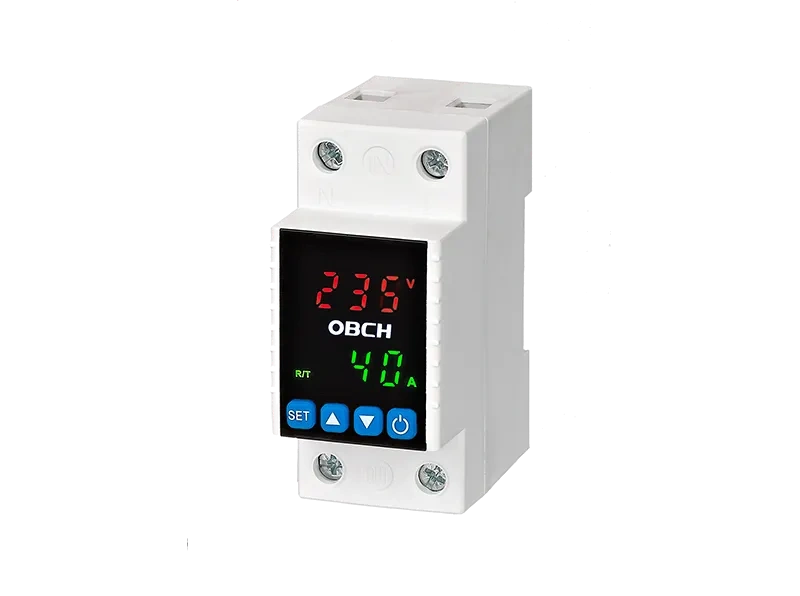
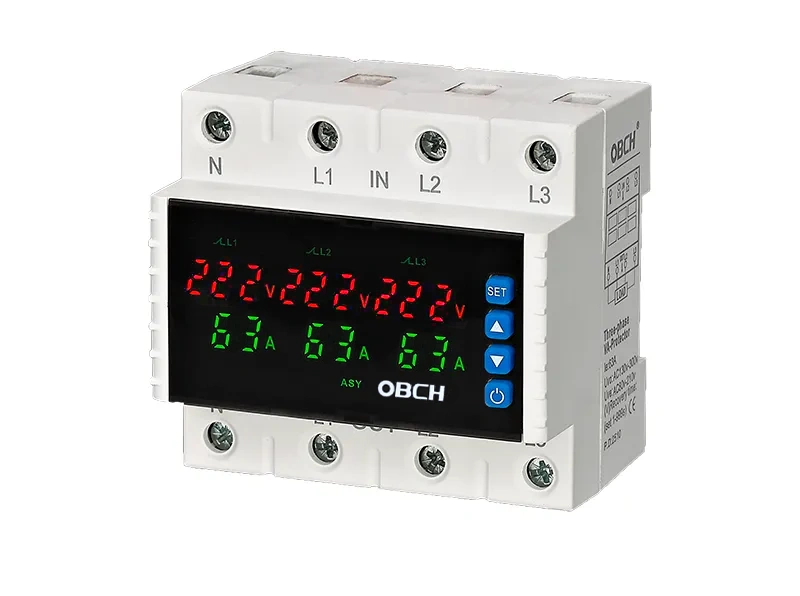
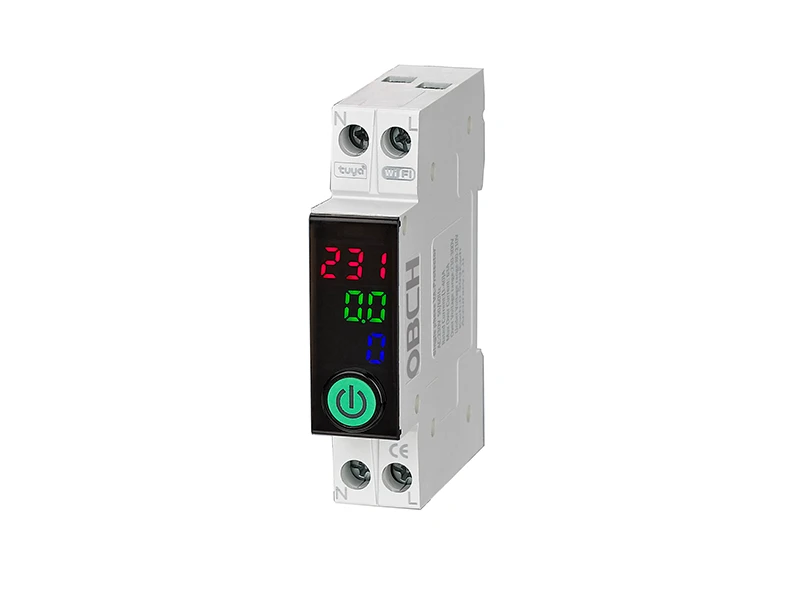
Good models come with adjustable setpoints, but increasingly, users want visibility — not just a green LED, but actual voltage readouts. That’s where a digital monitoring protector that shows real-time power conditions on a clear display proves its worth; you instantly know whether your utility is delivering 220V or 270V before your equipment pays the price.
A surge protector relies on components like Metal Oxide Varistors (MOVs) or Gas Discharge Tubes (GDTs) that change impedance dramatically when voltage crosses a certain threshold. Under normal conditions, they sit idle with high resistance. When a spike arrives, their resistance plummets, shunting the excess energy to the ground line and clamping the voltage to a level that downstream equipment can tolerate. The entire process happens in nanoseconds.
Crucially, a surge protector does not disconnect your equipment from the mains during a surge — it diverts energy. It also degrades over time. Every absorbed spike erodes its protective material slightly. No MOV-based surge protector lasts forever, yet many installations haven’t been checked in a decade. According to the IEC 61643-11 standard, surge protective devices have defined endurance ratings and failure modes, which is why industrial installations mandate periodic inspection.
| Aspect | Voltage Protector | Surge Protector |
| Primary threat | Sustained over/under voltage | Transient voltage spikes |
| Duration of threat | Seconds to hours | Microseconds to milliseconds |
| Core mechanism | Relay-based disconnection | MOV/GDT-based energy diversion |
| Response time | Milliseconds to seconds | Nanoseconds |
| Protection mode | Cuts power to load | Shunts energy to ground |
| Wear-out behavior | Relay cycle count limit | MOV degradation with each hit |
| Typical application | Refrigerators, ACs, pumps, whole-home | Computers, TVs, networking gear |
| Visibility | Often includes display for real-time voltage (consider an intelligent voltage safeguard with digital readout if you value transparency) | Usually simple LED indicators, if any |
The answer is rarely one or the other. It’s about layering risk. But most people start somewhere, so let’s walk through real scenarios.
Scenario 1: You live in an area with frequent brownouts or voltage swings.
Your lights dim randomly, your fan speeds fluctuate, and your fridge makes a labored humming noise. This is classic grid instability. A surge protector will do nothing for sustained low voltage — it only reacts to spikes. A voltage protector is what you need, ideally one with automatic reconnect and an adjustable delay. To stop playing guessing games with your power quality, you might want a real-time voltage display protection device that lets you read the incoming voltage at a glance, confirming stability before you plug in expensive gear.
Scenario 2: You work from home with a desktop PC, external drives, and networking equipment.
This gear is less sensitive to voltage swing (most modern PSUs handle a wide range) but extremely vulnerable to fast transients. A quality surge protector with a high joule rating and a clamping voltage below 400V is baseline. If thunderstorms are common in your region, consider a Type 2 surge protective device in your distribution board as well.
Scenario 3: You run a small commercial kitchen or workshop with motors, compressors, and control boards.
Here you need both. A voltage protector shields the motors from burnout during phase loss or undervoltage, while a surge protector defends the digital control boards from switching transients generated by the very equipment they control. Many facilities install a voltage protector at the main incomer and distributed surge protectors at sensitive subpanels. This hybrid approach greatly reduces unscheduled downtime, as noted in a 2023 report by the Electrical Research Institute (EPRI) on commercial equipment resilience.
Scenario 4: You’re a renter with limited ability to modify the electrical panel.
Plug-in solutions become your best friend. Look for a hybrid unit that combines voltage monitoring, disconnection, and surge absorption in a portable form factor. It’s not a replacement for proper layered protection, but it stops the majority of everyday incidents.
There was a time when protection was purely passive — install it and forget it. But today, with more people running home servers, 3D printers, imported appliances sensitive to voltage, and energy storage systems, the “black box” model doesn’t cut it anymore. When a fault occurs, you want to know the actual voltage at the moment of trip, not just guess.
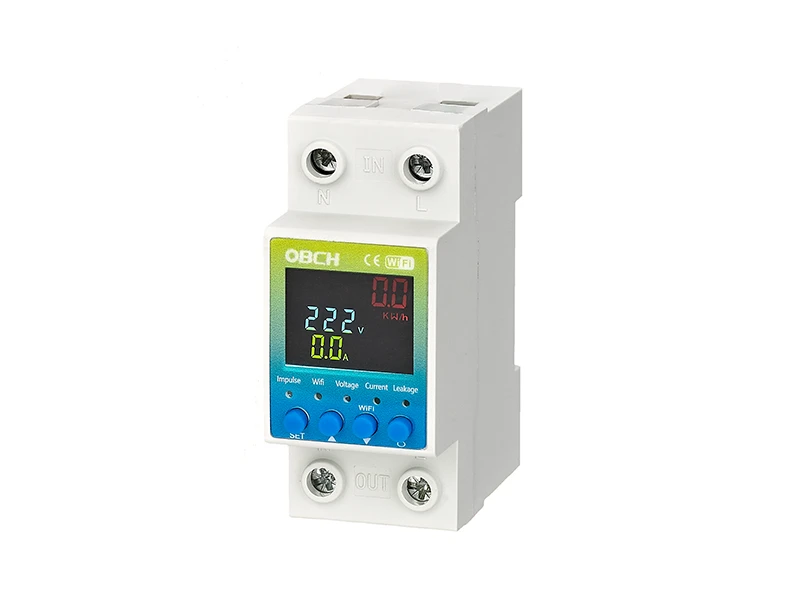
This shift toward transparency has fueled the demand for protectors that combine the disconnection logic of a voltage protector with the situational awareness of a digital panel meter. By seeing the real-time mains voltage, you can correlate equipment behavior with grid performance, log fluctuations over time, and even validate whether your utility is delivering within contractual limits. Some advanced units in this category also log the maximum and minimum recorded values, turning them into basic power quality monitors.
If you’re serious about troubleshooting intermittent issues — like a CNC machine that mysteriously halts only on Tuesday afternoons — that data is gold.
Through years of conversations with electricians and facilities managers, a few patterns emerge:
Never daisy-chain protectors. Plugging a voltage protector into a surge protector (or vice versa) can create unintended interactions, especially with time-delay relays. One reputable electrical safety organization, the Electrical Safety Foundation International (ESFI), warns against chaining multiple relocatable power taps due to cumulative loading risks and potential bypassing of protective functions.
Check the rating. A voltage protector rated for 16A won’t safely guard a 20A circuit. Match the current rating to your load with at least 20% headroom.
Surge protectors age. If your surge protector is older than three to five years and you live in a lightning-prone area, replace it. Many models with a “protected” LED still provide no real protection after MOV degradation.
Combine protection types. In an ideal world, a Type 1 or Type 2 surge protective device at the service entrance handles external surges, while plug-in voltage protectors address local instability and internal switching transients.
Start by observing your environment for a week. Do lights flicker at predictable times? Do you hear relays clicking in your appliances? Have you lost any electronics to unexplained failures in the past two years? The answers will point you to the dominant threat. From there, pick a solution that matches the signature, not the marketing.
And don’t settle for invisible operation. In a world where a single overvoltage event can take out a variable-frequency drive worth hundreds of dollars, the ability to see exactly what your mains is doing moves from a nice-to-have to a practical necessity.
If you’ve already decided that your setup warrants active voltage monitoring and reliable disconnection, OBCH’s lineup of voltage protectors brings that transparency into an easy-to-use format. Whether you need adjustable trip thresholds, a crisp live reading, or a delay that protects compressors, you can explore OBCH’s voltage protection series to see what fits your installation.
Disclaimer: This article is for informational purposes only and does not constitute professional electrical engineering advice. Always consult a licensed electrician before installing or modifying electrical protection equipment in your home or facility.

GET A QUOTE