
May 07,2026
Pageview: 72
We’ve all experienced it: the sudden flicker of lights, an unexplained restart of a computer, or the quiet death of a refrigerator that was “perfectly fine” yesterday. According to a 2023 power quality report by the Electric Power Research Institute (EPRI), nearly 87% of all electrical disturbances in residential and light commercial settings are not major blackouts, but brief voltage fluctuations—surges lasting microseconds and sags (brownouts) stretching for seconds or even minutes.
These micro-events are the silent killers of modern electronics. While a dramatic lightning strike gets the attention, it’s the daily diet of unstable voltage that slowly degrades internal components, leading to premature failure. So, if a standard surge protector strip isn’t enough, what actually works?
The term “dirty power” isn't just electrician slang; it refers to voltage waveforms that deviate from the ideal pure sine wave. Common culprits include heavy machinery starting up (like an elevator or AC compressor), faulty grid transformers, and even solar panel feed-in during cloudy days.
For a modern appliance with a sensitive control board—think a smart refrigerator, a variable-frequency drive (VFD) on an HVAC system, or a medical-grade CPAP machine—these fluctuations are problematic.
Surges (Over-voltage): Chip away at semiconductor junctions, causing latent defects.
Sags (Under-voltage): Force motors to draw higher current (Ohm’s law), leading to overheating and insulation breakdown.
A standard surge protector is essentially a firefighter that handles a big fire once. It does nothing for the daily embers. You need a device that actively monitors, decides, and disconnects—a proactive gatekeeper rather than a reactive sponge.
Think of the electrical grid as a river. Sometimes it floods (surge), and sometimes it dries up (brownout). A standard protector is like a sandbag—useful only against floods. A true voltage regulation device, however, is like a smart dam with an automated gate.
Here is the operational logic of a modern, intelligent protection system:
Continuous Monitoring: It samples the incoming voltage hundreds of times per second, tracking both the RMS (Root Mean Square) value and the waveform.
Threshold Decision: The user (or an installer) sets an acceptable voltage range. For standard 220-240V systems, this might be 170V to 280V, but sensitive equipment may need a narrower window (e.g., 195V to 245V).
Rapid Disconnection: If voltage strays outside the set window for more than a few hundred milliseconds (enough to ignore harmless noise but react to a real fault), an electromagnetic relay instantly cuts the load off from the grid.
Automatic Reconnection: Once stable voltage returns for a pre-set delay period (typically 15 seconds to 5 minutes), the device automatically reconnects power.
This “under-voltage” protection is critical. Many assume voltage only spikes. In reality, brownouts are far more common in aging grid infrastructures and cause more long-term damage to inductive loads like compressors and pumps.
Here is where most generic products fail. A fixed threshold protector—say, one that disconnects at 180V—is better than nothing, but it’s still a blunt instrument.
Consider two real-world scenarios:
Scenario A: The Remote Workshop. A woodworker has expensive dust collection and saw equipment with 3-phase motors. Low voltage (180V) will cause these motors to overheat in minutes. He needs a high under-voltage cutoff, say 195V.
Scenario B: The Rural Home. A family lives at the end of a long distribution line where voltage regularly drops to 170V during evening peak hours. A fixed 180V cutoff would leave them powerless every night. They need a device that can be adjusted down to 160V, protecting only against true, dangerous sags.
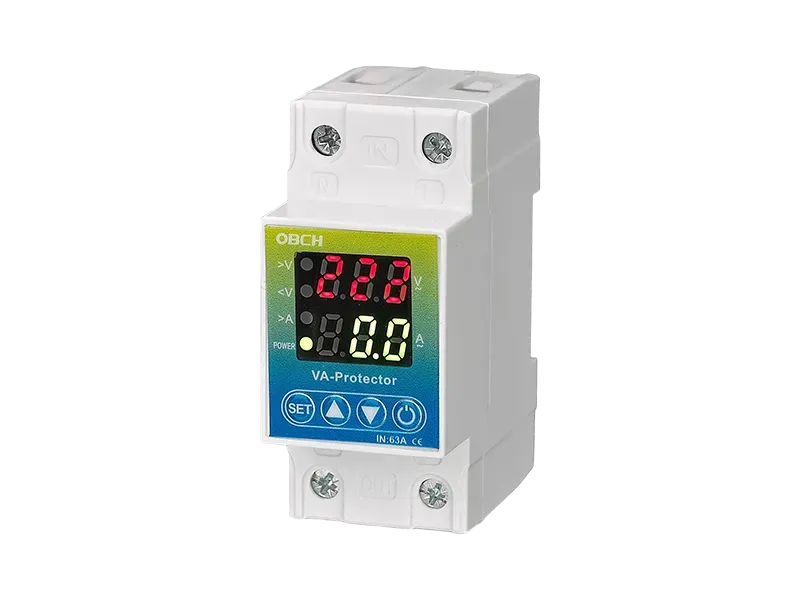
A fixed protector cannot serve both. This is why professionals move beyond basic surge strips to adjustable protection systems. The ability to customize the high and low voltage cut-off points transforms the device from a generic safety switch into a surgical tool tailored to your specific grid conditions and equipment sensitivity.
Through our work with facility managers and electricians, we see the same mistakes repeated. Avoiding these will save your equipment.
Misconception 1: “A UPS (Uninterruptible Power Supply) does the same thing.”
Reality: A UPS provides battery backup during a blackout and offers surge protection. However, many low-to-mid-range UPS units have wide input voltage windows (e.g., 170V to 280V) and will pass dirty power through without cleaning it, simply switching to battery only during a total outage or severe sag. A dedicated protector is faster and handles brownouts proactively.
Misconception 2: “Higher joule rating means better all-around protection.”
Reality: Joule rating only measures surge absorption capacity (for micro-second spikes). It says nothing about under-voltage detection or the speed of the disconnect relay. You need both.
Misconception 3: “I can just install it and forget it.”
Reality: While maintenance-free, you should test your device. Many quality protectors have a status LED or a test button. Also, if your area’s grid stability permanently improves (e.g., after a substation upgrade), you may want to narrow your voltage window for tighter protection.
Selecting a device for your home or business doesn’t require an engineering degree. Use this three-step checklist:
Determine Your Load Type: Is it purely resistive (lights, heaters) or inductive (motors, compressors, pumps)? Inductive loads need faster over-voltage response and tighter under-voltage settings.
Map Your Grid Profile: Use a plug-in voltage logger (or ask your utility) to see your minimum and maximum monthly voltage. Set your protector’s cut-off points 5-10% outside these extremes.
Check the Relay: Ensure the internal relay is rated for your continuous current plus a 20% safety margin. A 40A relay for a 30A continuous load is a good rule.
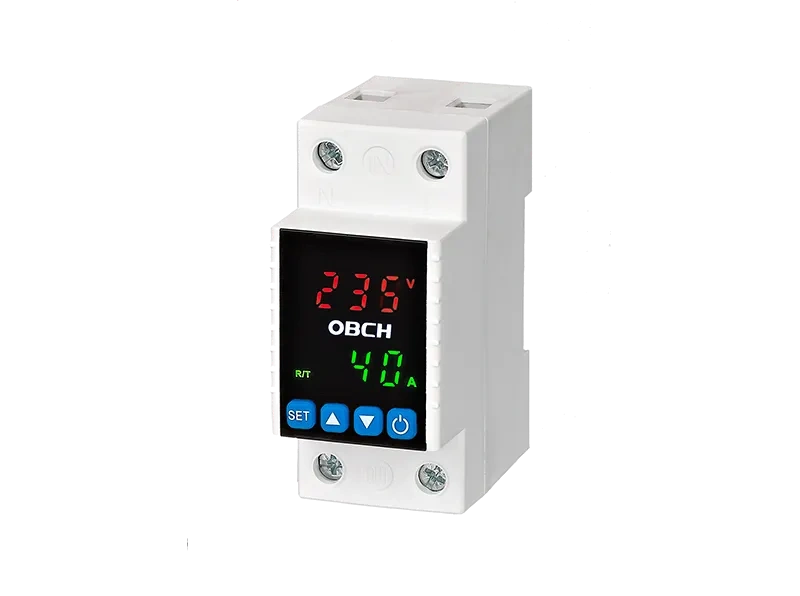
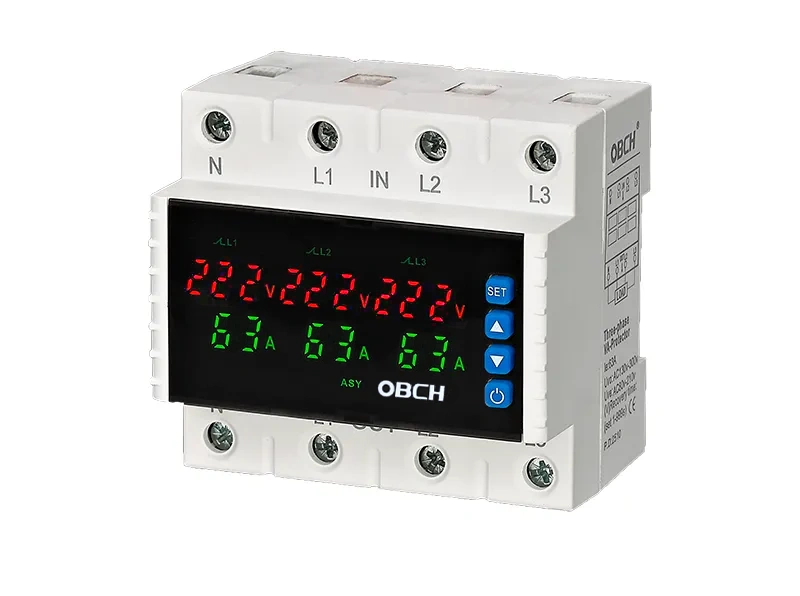
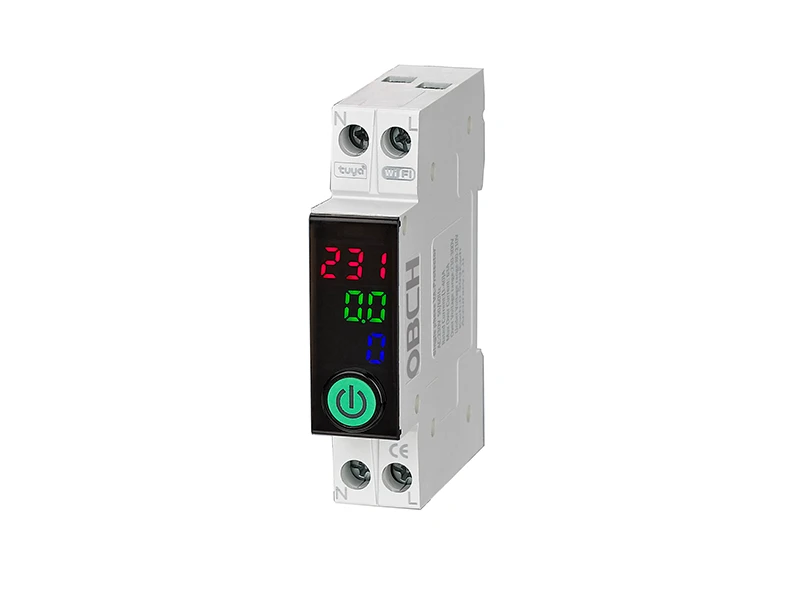
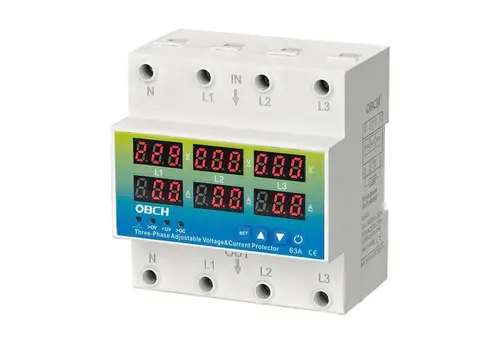
When you are ready to move beyond basic protection, the engineering behind the device matters. For those seeking a solution that combines industrial-grade components with user-friendly adjustability, OBCH has developed a range of intelligent protection systems. Their devices feature high-breaking-capacity relays and a transparent setpoint accuracy of ±2%, certified to international safety standards. You can explore how these protectors are configured for different grid conditions to see if the specifications match your local power profile.
As utilities integrate more renewable energy sources (solar, wind), grid instability is not going away—it’s changing. Fast voltage changes (FVC) caused by cloud shadows on solar farms are a new reality. This means your protectors need faster sampling rates and more reliable auto-reconnection logic.
The low-cost, fixed-unit will disconnect and stay disconnected until a manual reset. A modern adjustable unit will reattempt connection intelligently, preventing a “nuisance trip” that leaves your freezer off for eight hours.
Investing in a quality protector is not a fear-based purchase. It’s a data-driven decision. The cost of replacing a single VFD (Variable Frequency Drive) on an air conditioner can exceed $800. A whole-home protector costs a fraction of that and provides a decade of service.
So, take a moment tonight. Walk through your house and count the smart devices—the TVs, routers, gaming consoles, and appliances that have a chip. Each one is a candidate for latent voltage damage. The grid is a powerful but imperfect servant. Give it a competent supervisor.
We often get asked: “Is this overkill?” The answer depends on your tolerance for device replacement and downtime. For a critical well pump, a home server, or a medical device, overkill is the right amount of caution.
To see a full product lineup with application-specific recommendations (e.g., for RV parks, marine use, or well pumps), visit the OBCH adjustable protection series page to match a model to your exact ampere rating and voltage window.

GET A QUOTE
 English
 Chinese
 Pусский
 Français
 Español
 Deutsch
 Português
 한국인
한국인 عربي
عربي