English
 Chinese
 Pусский
 Français
 Español
 Deutsch
 Português
 한국인
한국인 عربي
عربي Prev:
null

Jun 17,2026
Pageview: 6
It’s a frantic Monday morning. Your café’s espresso machine, the heart of the breakfast rush, suddenly powers down. The culprit? A sag in mains voltage that a basic “protection” device didn’t catch—because it wasn’t designed to. You’ve seen terms like voltage guard, surge suppressor, and automatic voltage regulator floating around, and now you’re wondering: can that compact box I installed to stop spikes actually do the job of a bulky stabilizer? The short answer is no, but the full picture is more nuanced—and knowing the difference can save thousands in damaged equipment.
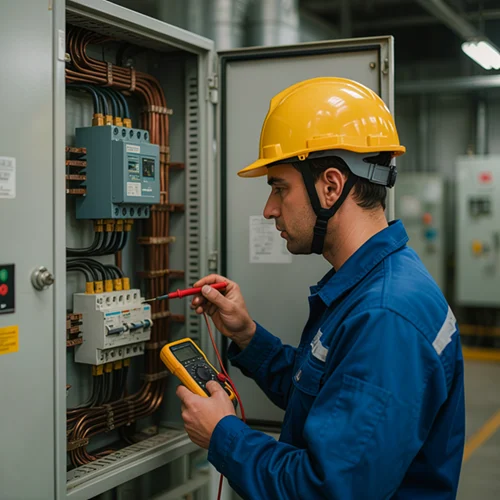
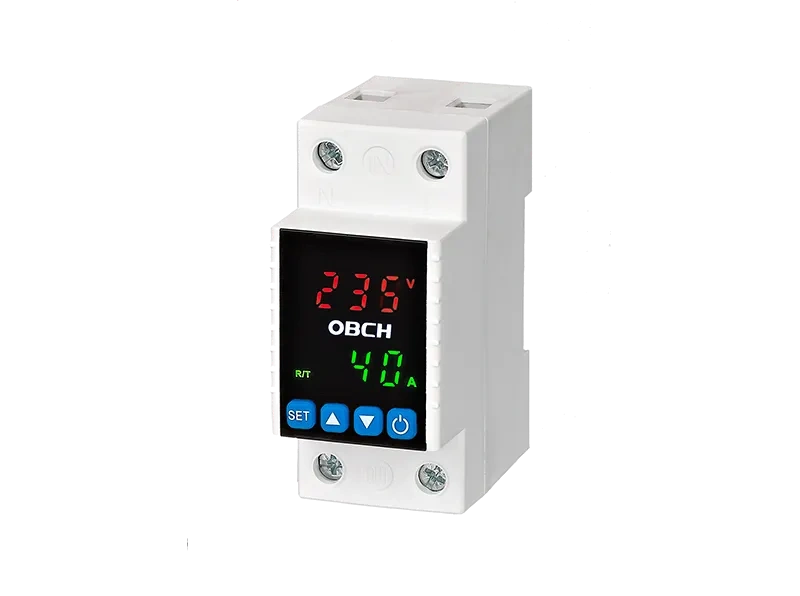
Many equipment owners confuse two fundamentally different problems: destructive transient events and chronic voltage instability. A voltage protector is designed to react to sudden, dangerous overvoltage or undervoltage conditions by disconnecting the load. It’s an emergency stop button. A voltage stabilizer, on the other hand, continuously adjusts output voltage within a tight band—its job is to smooth out the persistent high or low voltages that slowly cook electronics or cause erratic behavior.
In practice, if you live in an area where the grid often sags to 180V at 6 PM, a protector will simply trip and leave you in the dark; a stabilizer will boost that 180V back up to a usable 220V. This single distinction drives the entire debate. Yet search forums overflow with users trying to make one replace the other, often after a repair technician says, “You need better power protection.” Vague language in product listings only adds to the muddle.
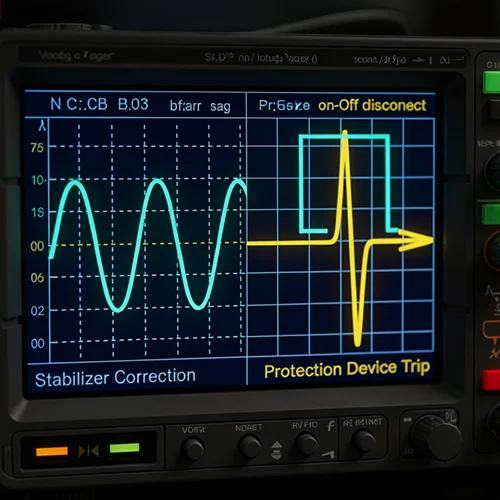
To clear up the technical boundaries, let’s line them up side by side.
| Feature | Voltage Protector | Voltage Stabilizer |
| Primary function | Disconnects power when limits are breached | Regulates output voltage continuously |
| Response to sag (e.g., 180V) | Cuts off load to prevent damage | Boosts voltage to nominal level |
| Response to surge (e.g., 290V) | Cuts off in milliseconds | Typically absorbs and regulates within range; may disconnect if extreme |
| Typical response time | 10–50 ns (with quality components) | 2–10 ms (servo) or 20–50 ms (relay-based) |
| Protection from transients | Excellent (if integrated with surge protection) | Moderate; may need additional SPD |
| Effect on load during normal operation | None (pass-through) | Slight power consumption (0.5–3%) |
| Best for | Sensitive electronics needing instant disconnect on fault | Motors, compressors, IT equipment in unstable grids |
From this table, it’s evident that these devices sit on different layers of a defense-in-depth strategy. According to IEEE Std 1159 and IEC 62040, power quality disturbances are categorized by duration and magnitude. A transient overvoltage (a few microseconds) is best handled by a surge protective device or the fast disconnect mechanism of a protector. A long-duration undervoltage (minutes to hours) falls squarely into stabilizer territory.
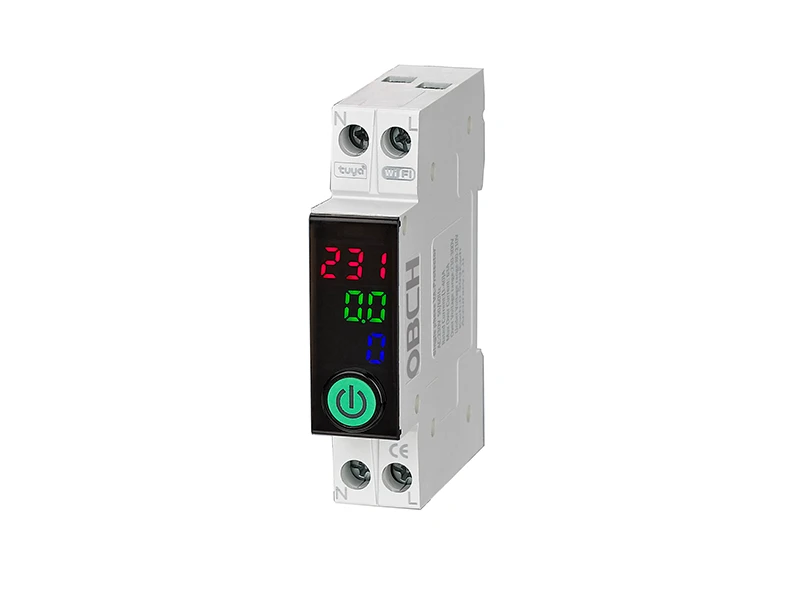
A major source of confusion is the fact that some advanced protection units now incorporate basic voltage monitoring and disconnect thresholds. If a device can automatically cut off at 260V and reconnect at 250V, it feels like it’s regulating. But this is hysteresis-based switching, not regulation. There is no transformer or electronic circuit that actively modifies the wave amplitude. So when someone asks in a hardware forum, “I bought a voltage protector; will it protect my fridge from low voltage?” the answer is still no—it will protect it by turning it off, which isn’t helpful if you need the fridge running through the brownout.
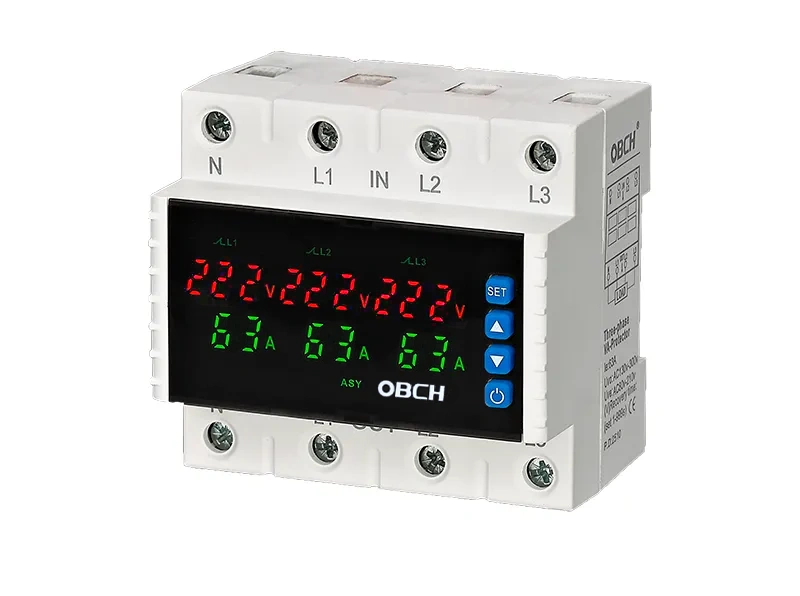
For overcurrent events, a current protector trips the circuit based on thermal or magnetic sensing, completely different from voltage-based disconnection. Many modern panels combine voltage and current protection in a single compact disconnect protection unit, which leads users to assume it also stabilizes. This is where reading the spec sheet carefully matters.
Consider a real-world case: a small print shop ran a digital press worth $20,000 on a circuit guarded only by a low-cost overvoltage protector. After a six-month period of nightly voltage drops to 190V, the press’s power supply board failed—not from a spike, but from sustained thermal stress caused by undervoltage. The repair cost exceeded the price of a proper servo stabilizer. Situations like this are documented routinely by electrical contractors, who often recommend layered power conditioning. If you need a quick reference, IEC 61643-11 covers surge protective devices, while IEC 62040 covers UPS and broader power conditioning, and neither standard suggests that a disconnect device can substitute for voltage regulation.
At the same time, there are scenarios where a fast-acting protector is exactly what you need—and a stabilizer alone isn’t enough. For example, lightning-prone areas demand nanosecond-level surge disconnection that many stabilizers can’t provide. This is where a layered design shines: a protector downstream for fast fault isolation, and a stabilizer upstream for continuous regulation. If you’re looking to build such a setup, it helps to browse combined protection solutions that seamlessly integrate with existing distribution boards.
In almost all cases, no. But that doesn’t mean you always need both. The decision tree looks like this:
Stable grid, only risk is lightning or switching spikes → A quality protector with surge absorption is sufficient.
Unstable grid, frequent sags or high voltage → A stabilizer is essential; a protector alone will lead to nuisance disconnections and downtime.
Critical equipment in an unpredictable environment → A protector plus a stabilizer (or a UPS with AVR) provides comprehensive coverage.
When assessing your own site, measure voltage over a week with a logger—data kills guesswork. Once you know the pattern, equipment selection becomes straightforward.
What often gets missed in these discussions is that electrical protection isn’t about picking one magic box. The most robust installations use cascading stages: type 1 or 2 surge protective devices at the main panel, a voltage stabilizer for critical loads, and a fast disconnect protection device right before sensitive end equipment. This staged approach, backed by standards like IEC 60364, dramatically improves mean time between failures.
For those ready to implement this layered strategy, you may want to view Obch’s protective devices for home and industry. Their product line illustrates how modern protection modules can coexist with stabilizers, each doing what they do best.
Final thought: Asking whether a voltage protector can replace a stabilizer is like asking whether a circuit breaker can replace an electrician. They serve different roles in a healthy electrical ecosystem. Learn their language, and you’ll stop reacting to failures—and start preventing them.
*References: IEEE Std 1159-2019, IEC 61643-11, IEC 62040-3. This article is for informational purposes only; consult a qualified electrician for installation recommendations.*

GET A QUOTE