
Apr 23,2026
Pageview: 73
Power distribution boxes and electrical panels are often used interchangeably, but they serve distinct roles in electrical systems. A power distribution box is a compact, modular unit designed to split incoming power into multiple circuits with basic protection, while an electrical panel is a larger, more complex assembly that houses main breakers and subcircuits for entire buildings. Understanding this difference is critical for choosing the right equipment to ensure residential electrical safety and compliance with NFPA 70 standards.
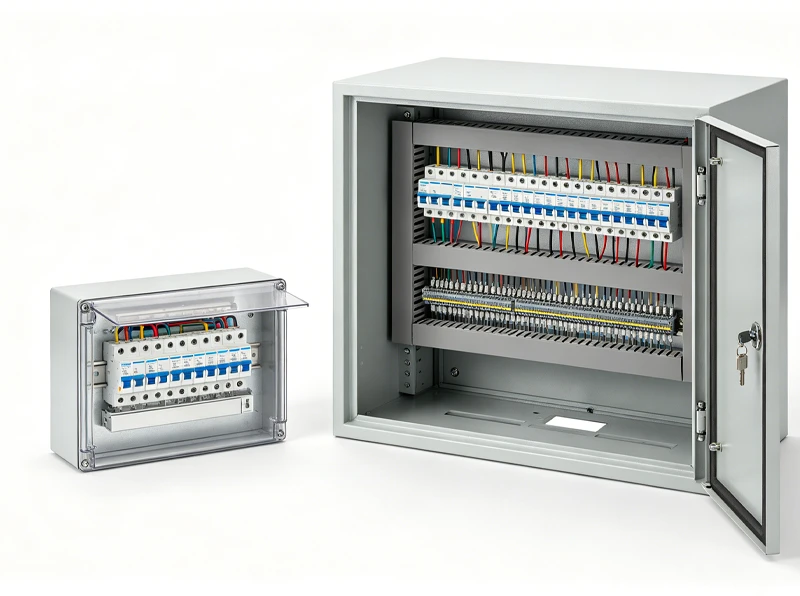
The primary distinction lies in their scope of operation. An electrical panel, also known as a load center or breaker box, is the main control point for an entire building's electrical system. It receives power from the utility company and distributes it to all branch circuits throughout the property, housing the main disconnect switch and individual circuit breakers that protect against overloads and short circuits.
In contrast, circuit distribution units act as secondary hubs that take power from an existing electrical panel and split it into smaller, dedicated circuits for specific areas or equipment. They are not designed to serve as the primary power distribution point for an entire building, but rather to extend and organize power in localized spaces.
Electrical panels are typically large, metal enclosures that require professional installation in dedicated, easily accessible spaces such as basements, garages, or utility rooms. They are designed to accommodate multiple rows of circuit breakers and often include space for future expansion.
Modular electrical enclosures, on the other hand, are much smaller and more flexible. They come in a variety of sizes, from 2-way to 24-way configurations, and can be installed in tight spaces or even outdoors. Many models feature IP65 waterproof ratings and UV protection, making them suitable for exterior applications such as garden lighting, pool equipment, and outdoor workshops.
.webp)
According to the National Fire Protection Association (NFPA), electrical distribution or lighting equipment was involved in an average of 31,647 home structure fires per year between 2019 and 2023, causing 425 deaths and $1.6 billion in property damage annually. Choosing the right electrical equipment is essential for preventing these tragedies.
Electrical panels are required for all new construction and major renovations, as they provide the primary overcurrent protection for the entire building. They are also necessary for homes with high-power appliances such as electric ranges, HVAC systems, and EV chargers.
Circuit distribution units are ideal for adding additional circuits to an existing electrical system without upgrading the main panel. Common residential applications include:
In commercial settings, they are often used for:
After 12 years working in electrical contracting, I've seen countless homeowners and small business owners waste money installing full electrical panels when a simpler, more compact solution would have sufficed. The key is to match the equipment to your specific load requirements and installation environment.
You should install an electrical panel if:
You should consider a circuit distribution unit if:
In recent years, there has been a growing demand for flexible, cost-effective electrical solutions that can adapt to changing needs. Modular circuit protection systems offer several advantages over traditional electrical panels, including easier installation, lower cost, and greater flexibility.
For applications that require localized power splitting and basic protection without the complexity of a full electrical panel, a power distribution box is the ideal solution. Unlike bulky electrical panels that require professional installation in dedicated spaces, these compact units can be mounted outdoors, concealed in walls, or placed in tight areas, making them perfect for garages, workshops, and outdoor patios.
While electrical panels are necessary for main power distribution in large buildings, a power distribution box offers a more flexible and cost-effective option for secondary circuits and specialized applications. OBCH, a manufacturer with 15 years of industry experience, has completed over 350 OEM and ODM projects for clients in more than 100 countries. Their products feature 100% quality inspection from raw materials to finished goods, and come with an extended 2-year warranty and 24/7 technical support. They also offer flexible customization options, including modified circuit boards, custom colors, and LED displays, to meet the unique needs of different projects.
view detailed product specifications
In conclusion, while both electrical panels and circuit distribution units play important roles in electrical systems, they are not interchangeable. By understanding their differences and choosing the right equipment for your specific needs, you can ensure the safety and reliability of your electrical system while saving time and money.

GET A QUOTE
 English
 Chinese
 Pусский
 Français
 Español
 Deutsch
 Português
 한국인
한국인 عربي
عربي